As an audio engineer who has been working in the live performance industry for eight years, I have only one core requirement for wireless microphone receivers: stability. Whether it’s an indoor theater or an outdoor music festival, equipment failure during a show is simply unacceptable. In several recent large-scale events, we switched to the AMSaudio TC2200, and the performance of this high-end flagship series genuinely refreshed my perception of domestic professional equipment—especially in key areas like multi-channel capability and system adaptability. Today, I’ll share practical, real-world insights based on actual usage scenarios.
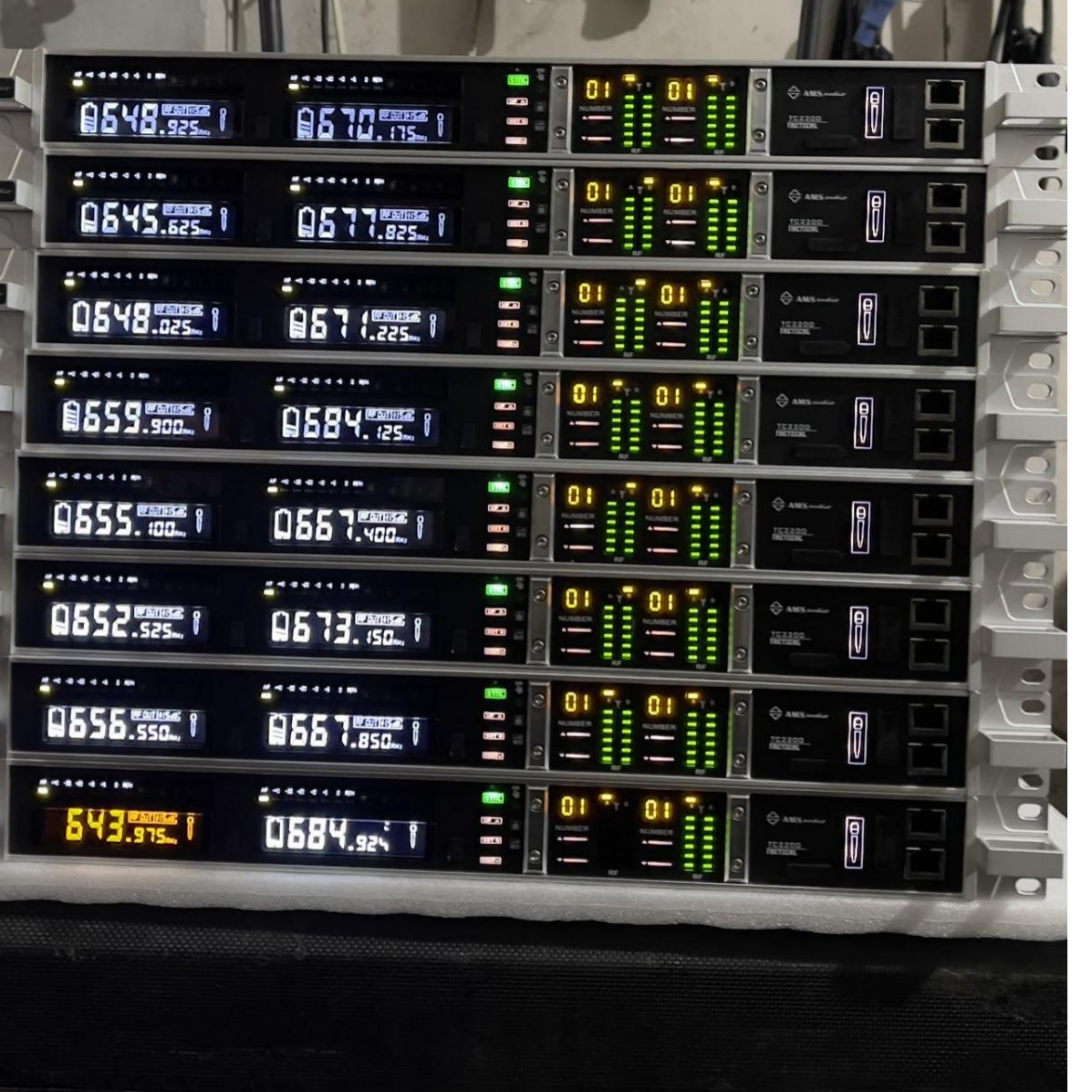
AMSaudio TC2200 True Diversity Dual-Channel Wireless Microphone Receiver
Let’s start with the long-standing challenge of multi-channel productions. The TC2200’s cascading capability directly addresses this pain point. In the past, when handling large choir and band performances involving dozens of performers, not only were channels insufficient, but stacking multiple devices together resulted in chaotic antenna wiring—like a spider web—and frequent signal conflicts.
This unit supports cascading up to 48 channels. In our last setup, paired with a UC80 antenna distribution system, eight units were linked together to easily handle 64 channels. With proper system architecture planning, scaling beyond 100 channels is entirely achievable. Even better, when cascading up to four units, only two shared antennas are required, greatly simplifying cabling. Setup efficiency improved by at least double—we no longer have to wrestle with a mess of antenna lines.
The main unit provides a +12 dBu output level (note: professional parameter in dBu, and real-world gain performance aligns with stage needs), which greatly enhances system compatibility. Live venues use a wide variety of mixing consoles—some are modern digital desks, others are older analog models. In the past, we often encountered insufficient gain or mismatched levels, requiring additional amplifiers, which cost time and potentially affected sound quality.
The TC2200 offers a wide gain range. No matter what console it’s connected to, a small adjustment quickly brings the system to optimal performance. Whether for vocals or instrument reinforcement, the signal output remains stable and consistent, eliminating concerns about device compatibility.
The built-in antenna line loss compensation is one of those “low-profile but extremely practical” technologies. In outdoor performances, antennas often require long feeder cables, and signal attenuation over distance is a constant issue. Previously, we had to install separate compensation devices, which took up space and added potential failure points.
The TC2200 integrates this function internally. Even with several meters—or even over ten meters—of feeder cable, the system automatically compensates for line loss, maintaining strong signal strength. At a recent outdoor music festival with heavy interference, we paired it with active antennas and adjusted compensation levels to effectively avoid interference issues, achieving zero signal fluctuation throughout the event.
Another feature worth highlighting is its patented one-key switching technology between bodypack and handheld transmitters, which is a major cost-saving advantage for small to mid-sized productions. In the past, we needed multiple receivers for different transmitters. When a singer needed to switch from handheld to bodypack (for example, during dance performances), backstage staff had to manually change frequencies, often causing audio dropouts.
With the TC2200, a single receiver can store two frequencies. A long press of a button enables seamless switching between handheld and bodypack, with automatic audio muting during the transition—completely transparent to the audience. During a small theatrical production, we used one unit to handle both handheld and lavalier microphones for actors. Equipment investment was reduced, operation became simpler, and system fault tolerance improved.
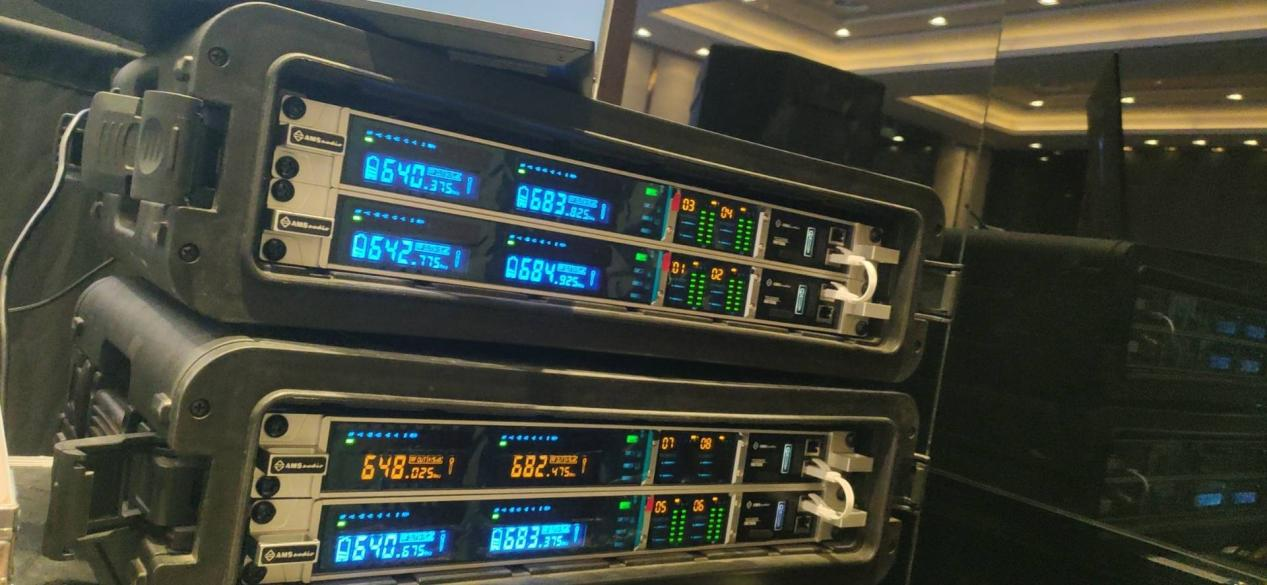
AMSaudio TC2200 True Diversity Dual-Channel Wireless Microphone Receiver
That said, the TC2200 is not without drawbacks. As a high-end flagship model, its price is indeed significantly higher than standard receivers. For small production teams with tight budgets, its cost-performance ratio may not seem as attractive.
Overall, however, the AMSaudio TC2200 fully lives up to its flagship positioning. In terms of signal stability, functional practicality, and application flexibility, it meets the demanding requirements of mid-to-large-scale professional productions. For teams that prioritize zero performance errors and equipment reliability, its performance advantages more than justify the cost.
As a frontline professional who works on-site year-round, seeing domestic audio equipment reach this level of professionalism is genuinely reassuring. For future large-scale events, this model will definitely be one of our top choices.