When working with antennas, you’ll often hear terms like “active paddle antenna” and “passive paddle antenna.” Many people get confused — what exactly is the difference? And how do you choose the right one?
Don’t worry. Today we’ll explain it in the simplest way possible, so whether you’re a beginner or an experienced user, you’ll clearly understand the differences and know which one suits your needs best.
First, let’s talk about the simplest type: the passive paddle antenna.
To put it simply, it’s the “basic version” antenna and very easy to identify. It does not contain any extra components such as compensation modules or compensation circuits. You simply connect the feeder cable, and it’s ready to work immediately — no complicated setup required. Think of it like a basic household appliance: plug it in and it works. Simple, practical, and reliable.
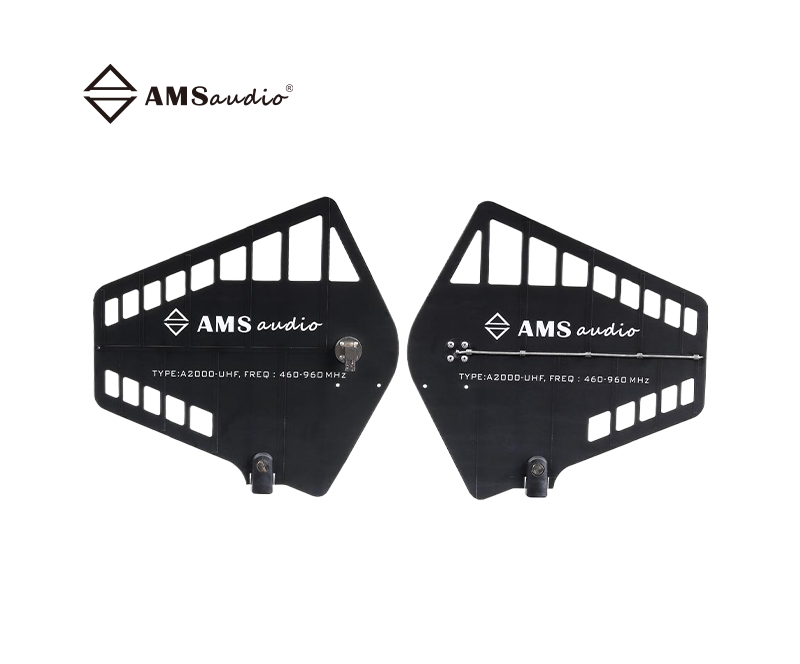 AMSaudio A2000M Passive Wideband Directional Antenna
Now let’s look at the active paddle antenna. Compared with a passive antenna, it’s more like an “upgraded version with extra features.” The directional antennas equipped with compensation modules or compensation boxes are active antennas.
Inside, there is a dedicated compensation circuit. After connecting the feeder cable, you can manually select the active compensation mode. It can not only compensate signal loss, but also attenuate signals when necessary, giving you much greater flexibility. In other words, the active directional antennas we often talk about are exactly this type of active antenna, designed to keep signals more stable in demanding situations.
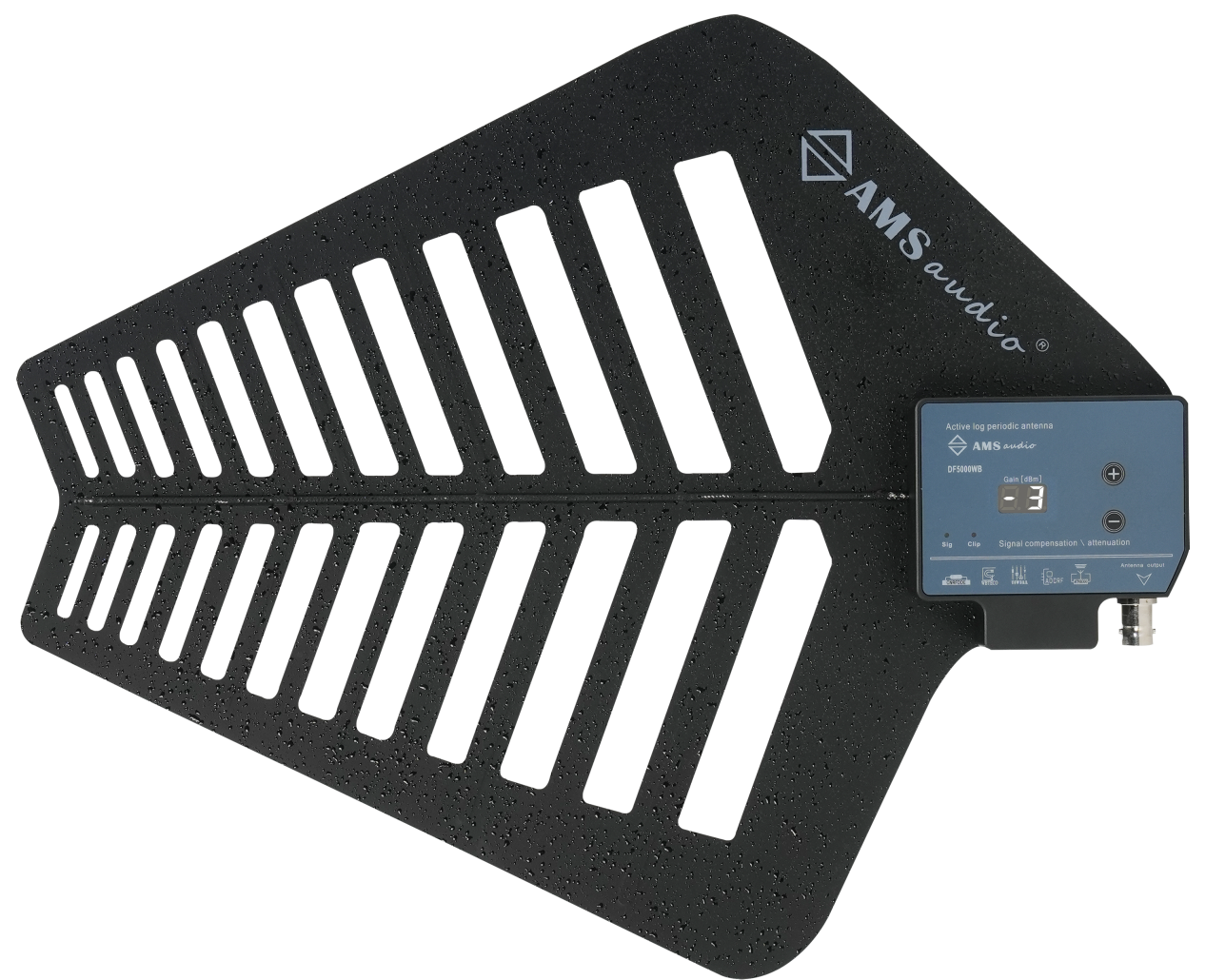
AMSaudio DF5000WB Active Full-Band Directional Antenna
Now comes the most important question: should you choose a passive antenna or an active antenna?
The answer mainly depends on two things:
Your budget
Your signal requirements
Let’s break it down clearly.
Why Choose a Passive Antenna?
The biggest advantage of a passive antenna is its affordability and excellent cost performance.
Because it does not include complex compensation circuits or modules, the structure is simple and manufacturing costs are lower. If your application is relatively straightforward and you do not need signal compensation or attenuation — for example, short-distance signal transmission or environments with good signal conditions — then a passive antenna is usually the best choice.
You spend less money while still getting reliable performance. In addition, passive antennas do not require extra power and involve almost no adjustment or maintenance, making them extremely easy to use and highly dependable in daily operation.
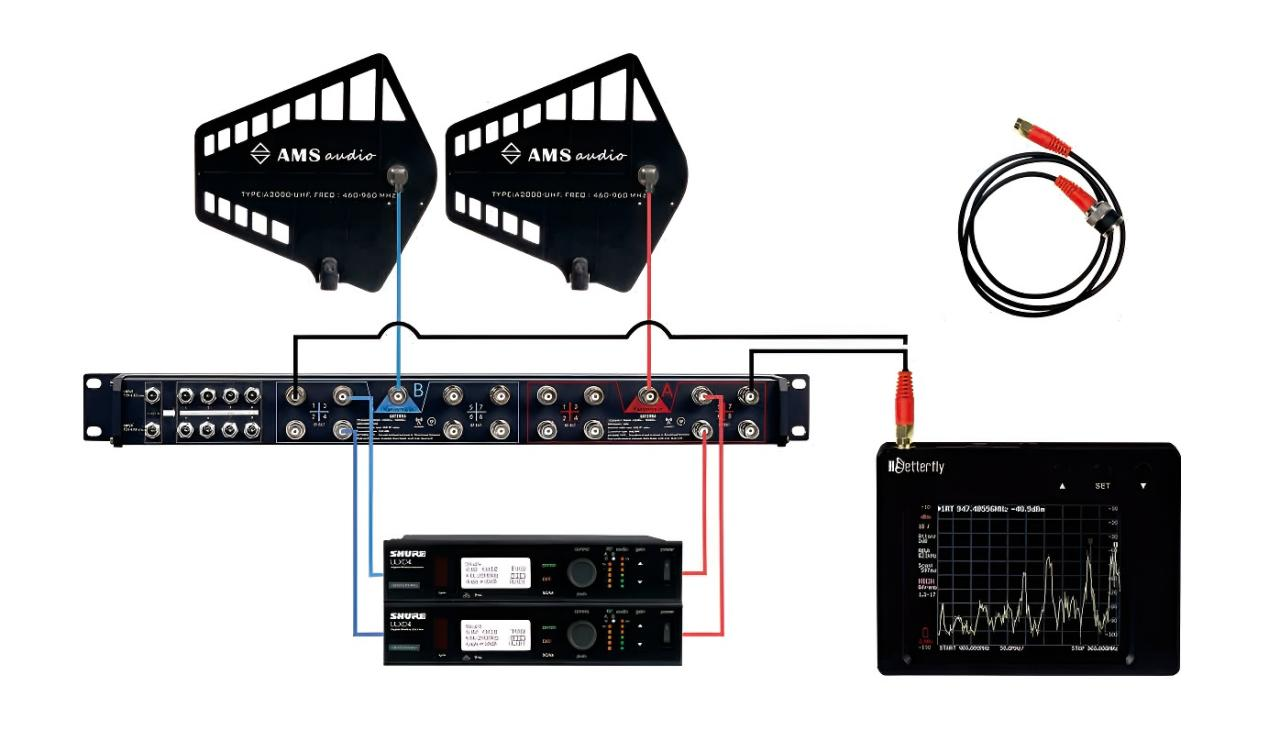
Passive Antenna Application Example
Why Choose an Active Antenna?
The main advantage of an active antenna is flexibility and stronger adaptability in complex signal environments. Of course, the downside is the higher cost compared with passive antennas.
Because active antennas include compensation modules and circuits, they can compensate for signal loss or attenuate excessive signals, making them ideal for more challenging applications. For example:
Weak signal environments
Long cable transmission distances
Situations requiring signal strength adjustment for different venues
In these cases, an active antenna becomes extremely useful.
Take the AMSaudio DF5000 as an example — it supports compensation and attenuation from -9dB to +12dB. Whether the signal is too weak and needs boosting, or too strong and needs reducing, it can handle both easily.
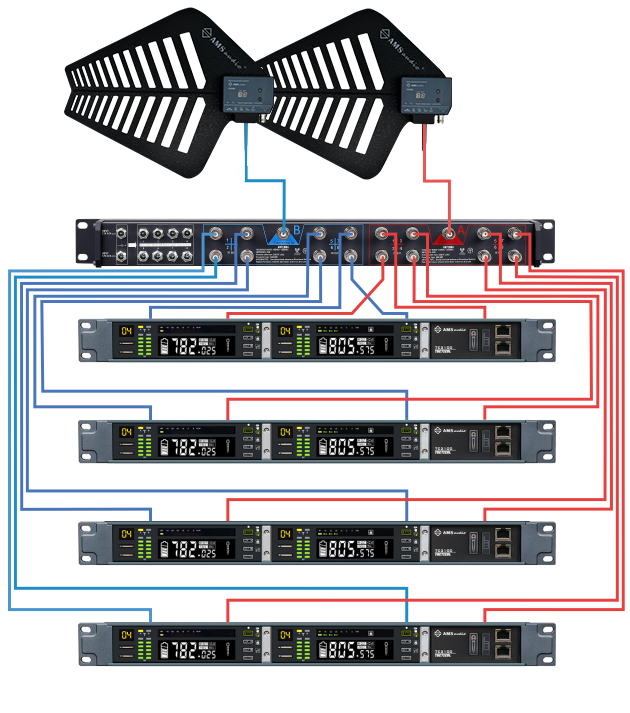
Active Antenna Application Example
Final Recommendation
To summarize:
If your budget is limited, your setup is simple, and you don’t need signal adjustment, choose a passive antenna. It offers excellent value for money.
If your budget allows and you need to handle complex RF environments with flexible signal adjustment, choose an active antenna for better adaptability and easier system optimization.
By now, the difference between active and passive antennas should be much clearer. There’s no need to be intimidated by the terms “active” and “passive.” In simple words, one is the “basic version,” while the other is the “upgraded version.” Choose according to your actual needs and budget, and you’ll make the right decision.